Many companies put off a visual identity project not because they don't feel the need, but because they don't know exactly what it involves. How long does it take? What do I need to prepare? What do I get at the end? How much of my time will it take?
These questions are normal. And most of the time, the answers are simpler than they seem.
I am writing this article because I want it to be clear what happens in a visual identity project — from the first conversation to delivery. No surprises, no complicated terminology.
Before the project: the first conversation
Every collaboration starts with a conversation. Not with a formal brief and not with an order — but with a discussion in which I try to understand a few essential things about the company.
What the company does and who it is for. What already works and what doesn't. What the current materials look like — website, presentations, proposals, social media. What comes next — a campaign, an event, an internal change. And what is expected from the project.
This conversation usually takes between 30 and 60 minutes. Sometimes a single meeting is enough. Other times I come back with a few more questions after analysing the existing materials.
The goal is not to fill in a form. It is to understand the company's direction well enough for my proposals to make sense from the first round.
Stage 1: Analysing what already exists
Before proposing anything new, I look at what already exists. I collect everything the company currently uses: logo, printed materials, presentations, website, social media, email signature, internal documents.
The goal is not to criticise what has been done so far. It is to understand what works, what can be kept and what needs rethinking.
Sometimes the existing logo is solid, but the way it is applied varies from one material to another. Sometimes the colours and fonts have multiplied organically, each material adding a new variation. And sometimes everything needs to be rebuilt from scratch — but that happens less often than you might think.
This analysis usually takes a few days. At the end of it, I have a clear picture of the current situation and of the direction we can take.
Stage 2: Visual direction proposals
Based on the conversation and the analysis, I prepare 2–3 visual directions. They are not final versions — they are directions: each one explores a different way the company could look and communicate.
Each direction usually includes a version of the logo (or a refinement of the existing one), a colour palette, a selection of fonts and a few indicative applications — what a business card, a letterhead or a presentation would look like in that direction.
I present the directions in a dedicated meeting, where I explain the reasoning behind each proposal. It is not about “which one do you like more” — it is about which one best translates the company's direction.
This is the most important stage of the whole project. It is the moment when the company sees for the first time how it could look — and when we reach a clear direction together.
Stage 3: Refinement
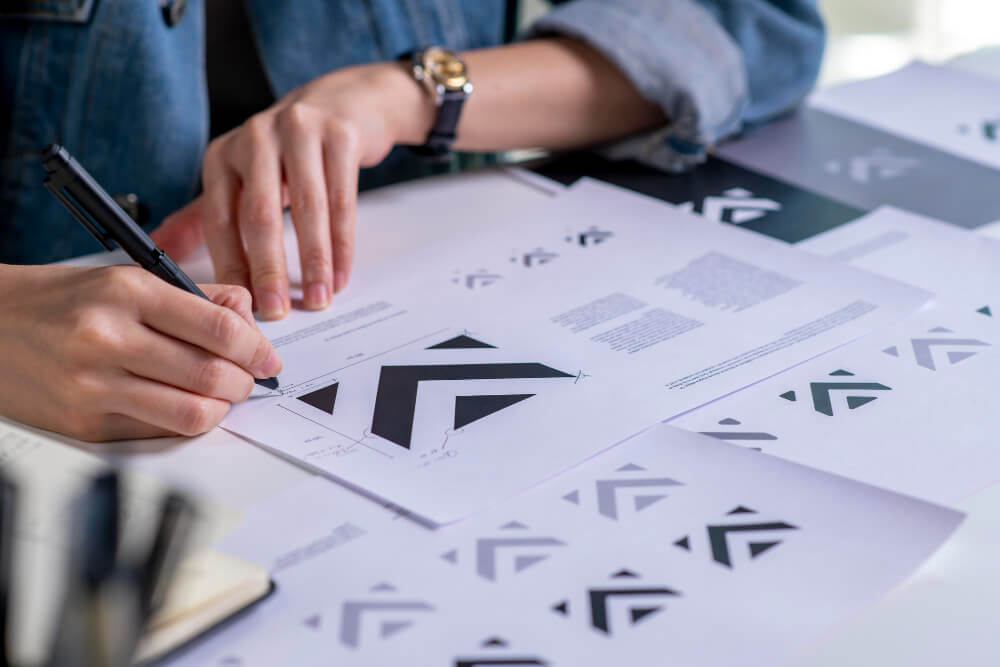
Once we choose a direction, we refine it. We adjust the details: proportions, colour shades, logo versions for different contexts (small format, large format, black and white, on a dark background), typographic combinations.
Refinement usually involves 2–3 rounds of feedback. I send the proposal, receive comments, adjust and send it again. Each round is shorter than the one before, because we are gradually getting closer to the final version.
It is important that everyone who will use the materials is involved at this stage — not just the managing director. If the sales or marketing team only sees the result at the end, the risk of late feedback increases.
Stage 4: The complete system
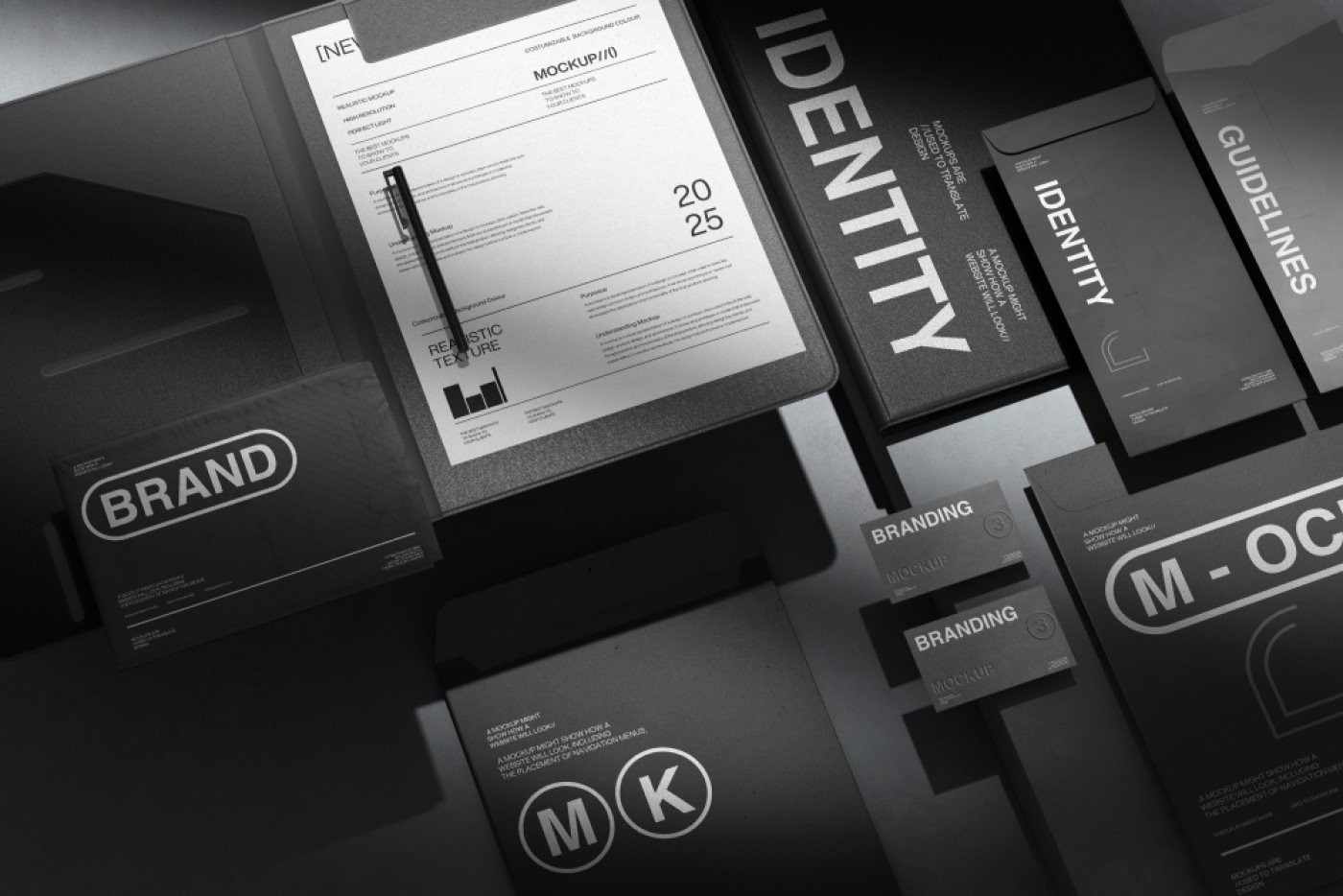
Once the visual identity is settled, I apply it to all the materials needed. What a complete project usually includes:
The logo in every format needed — for print, for digital, on light and dark backgrounds, in colour and black and white.
A defined colour palette — primary and secondary colours, with exact codes for print (CMYK) and digital (RGB, HEX).
Typography — the selected fonts, with clear guidance on where and how they are used.
Document templates — letterhead, proposal, invoice, email signature.
Business cards — ready to send to print.
PowerPoint presentation — a template with predefined slides, ready for internal use.
Usage guidelines — a document that explains how the visual identity is used, what is allowed and what isn't. This is the document every new colleague and every external supplier working with the company's materials receives.
Not every project includes every element. Some companies only need a refined logo and a few templates. Others need a complete system. We agree together, at the start, on what makes sense.
How long it takes
A complete visual identity project usually takes between 2 and 4 weeks. The variation depends on complexity, on the number of materials included and on how quickly feedback comes back.
The most common reason a project runs longer is not the design — it is internal feedback. When the decision passes through several people who were not aligned from the start, every round adds time.
That is why I recommend that everyone who will be involved in the decision takes part in the first conversation. There don't need to be many of them — but it is important that the people who decide are the same from start to finish.
What happens after delivery
Delivery is not the end of the collaboration. After you receive all the materials, there is a period in which you implement them — on the website, in documents, in external communication.
During this period, I am available for questions and minor adjustments. If the print shop needs something adapted on the business cards, if the team has a question about applying the logo on a specific background, if a new need comes up that wasn't planned at the start — we talk.
Many of the companies I have worked with on visual identity projects then continued with a monthly design subscription. Not because they need another branding project, but because they need new materials — campaigns, presentations, brochures — that stay consistent with the identity already built. But that is a separate decision, one that comes naturally if it makes sense.