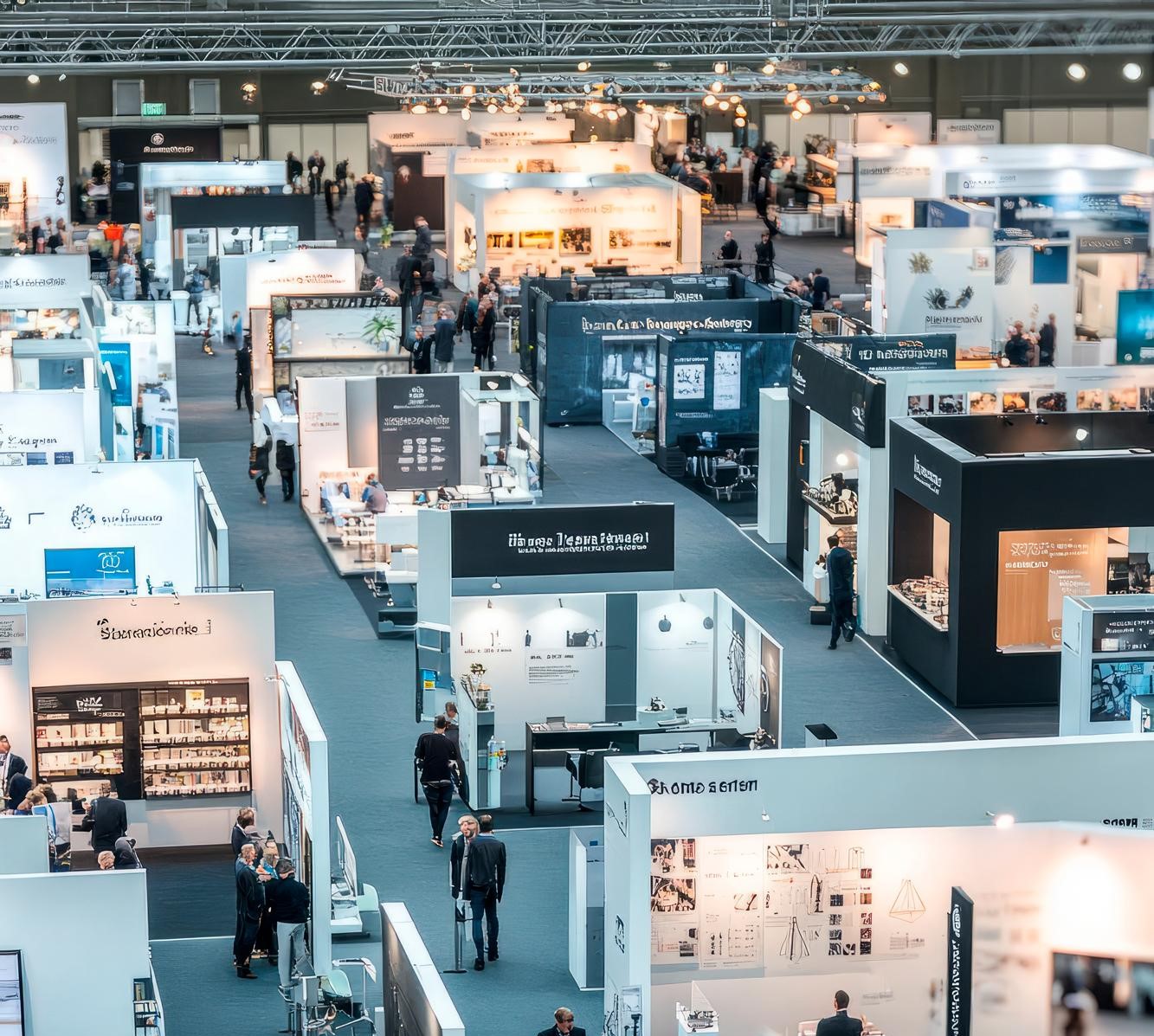
I have been preparing materials for companies exhibiting at trade fairs for more than ten years. I have seen stands that work and stands that don't. And every time, the difference doesn't come from where you would expect.
It doesn't come from the size of the stand. It doesn't come from the budget. It comes from what the visitor understands in the first three seconds.
Three seconds. That's all you have.
A trade fair visitor doesn't stop to read. They stop because something told them, very quickly, that this place is relevant to them.
I have often been to trade fairs as a visitor, not just as a designer. And what I have noticed about myself is simple: I walk past dozens of stands without remembering them. Not because they aren't good companies. But because nothing I saw told me clearly what they do, for whom and why I should stop.
When a stand communicates that — in a few words, in a clear visual, in a material you take with you — you stop. Not because it is spectacular. But because you understood straight away whether it is for you or not.
What works
I have noticed one constant at the stands where visitors stop and start conversations: everything says the same thing.
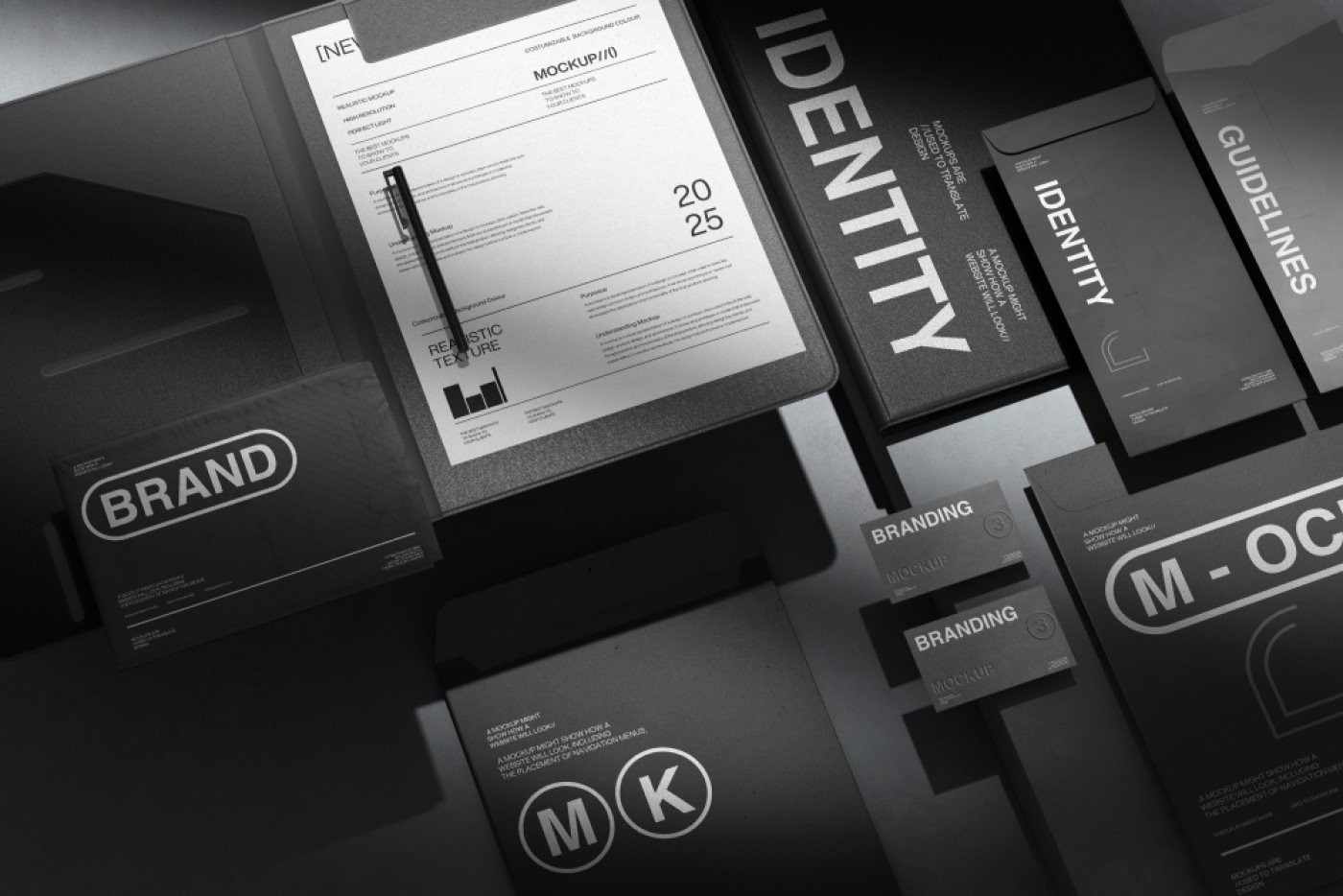
The banner at the back, the brochure on the table, the presentation on the screen, the business card — they all look like part of the same company. The colours are the same. The fonts are the same. The message is the same, worded differently depending on the format.
It seems like a detail. But the effect is that the visitor senses, without consciously analysing it, that they are dealing with an organised company. And in a setting where they walk past hundreds of stands, that organisation becomes a signal: “These people know what they're doing.”
It isn't about how each material looks on its own. It is about all of them together building the same impression.
What doesn't work
I have seen stands with large banners and expensive materials that conveyed nothing clear. The banner said one thing, the brochure another, the presentation on the screen came from a different project. Visually, each material looked decent on its own — but together they didn't tell any story.
The visitor senses this. They can't name it — they don't think “their brand is incoherent.” But they feel that something doesn't fit together. And they move on.
I have also seen the opposite: companies with a small stand, no screens or elaborate structures, but with materials that complemented each other. A clear roll-up, a well-thought-out brochure, a business card that looked the same. Visitors stopped. Not because the stand was big, but because the message was immediately understood.
What remains after the fair
The fair lasts two or three days. But the materials the visitor takes away — the brochure, the business card, perhaps a catalogue — are what keep working after the event is over.
I have prepared materials for companies that received calls and emails weeks after a fair, from visitors who simply found the brochure on their desk again and remembered the conversation. The material worked as a visual reminder: “Look, that was them. They seem serious. I'll call them.”
But I have also seen the reverse: companies that had good conversations at the stand, but whose materials no longer said anything once they landed on someone's desk. Without a clear visual context, without a message that stays in mind, the brochure ends up in the bin.
It isn't the material itself that makes the difference. It is the fact that the material continues what the conversation at the stand began.
Why I am writing about this
Because most companies that come to me before a trade fair arrive with a single request: “We need a roll-up and some brochures.” And it is a fair request — they really do need them.
But most of the time, the important discussion isn't about the roll-up. It is about what we want the visitor to understand, feel and remember. And only then do we translate that into materials.
A well-thought-out roll-up isn't one you notice at the fair. It is one that makes the rest of the conversation easier — because the visitor has already understood, before talking to anyone, what your company does.